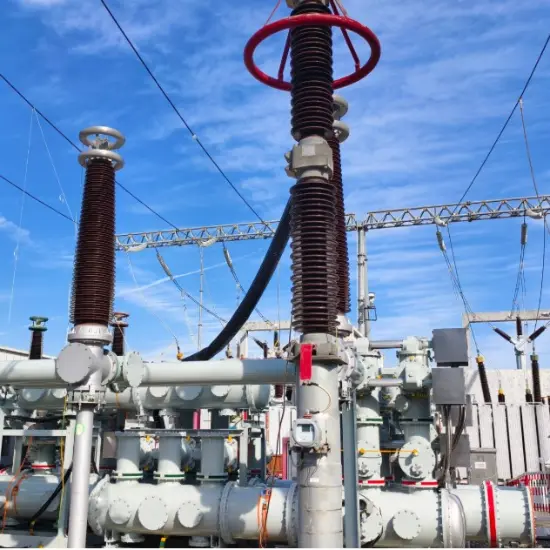
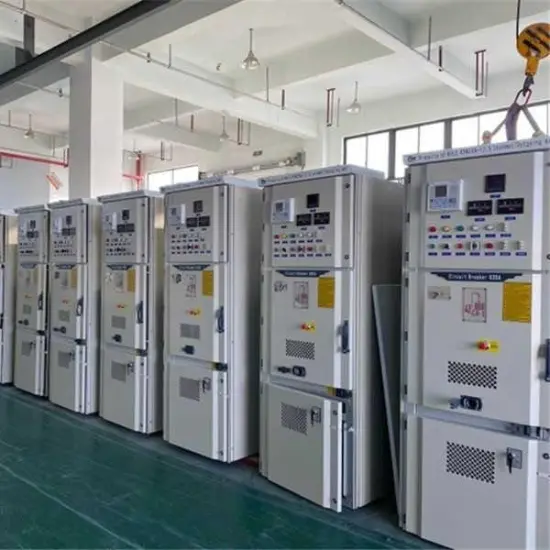
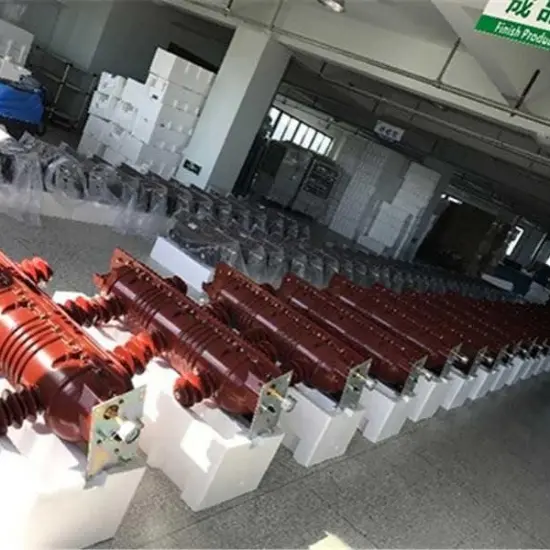
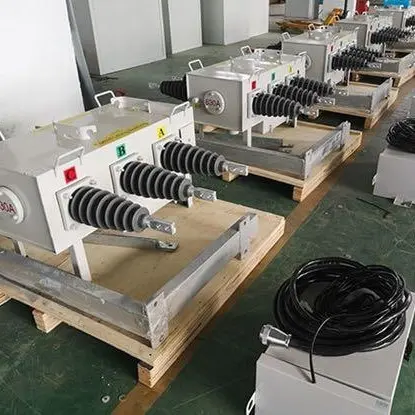
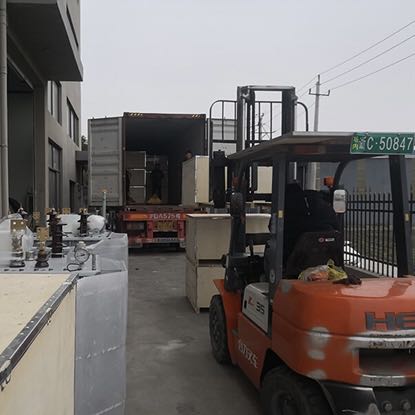
On December 13, it was learned from Rockwill that the company officially signed a contract with the Polish company Budowa for the export of individual 145kV eco-friendly GIS (Gas-Insulated Switchgear) units. This marks the first time that China’s independently developed eco-friendly high-voltage GIS equipment has entered the European market, representing a critical breakthrough in the internationalization of high-end power equipment.
The project spanned nearly eight months. The Rockwill technical team conducted multiple rounds of optimization on equipment structure, insulation performance, and intelligent control to meet the specific requirements of the European power grid and EU environmental regulations. Ultimately, the equipment passed EU environmental standards and technical certifications, meeting the European market's high demands for reliability, safety, and low-carbon performance. This successful certification highlights Rockwill’s technical expertise and innovative capabilities in the field of green grid equipment.
Rockwill’s 145kV eco-friendly GIS equipment utilizes clean air and other environmentally friendly gases to replace traditional sulfur hexafluoride (SF6), significantly reducing the impact on the greenhouse effect. SF6 is a potent greenhouse gas with a global warming potential (GWP) 23,500 times that of carbon dioxide CO2. Through technological innovation, Rockwill’s equipment achieves "zero carbon emissions" throughout its lifecycle, aligning with global energy transition trends. Previously, Rockwill's 145kV vacuum eco-friendly circuit breaker passed the certification of the Italian National Electricity Board (ENEL), becoming China's first fully eco-friendly switchgear product to enter the European market.
The European market maintains some of the world's strictest technical barriers and environmental requirements; thus, this cooperation signifies international recognition of the technical prowess of "Made in China" in the high-end power equipment sector. As a major local power service provider, Poland’s Budowa chose Rockwill’s products as an affirmation of equipment quality and a vote of confidence in the technical services of Chinese enterprises. The two parties plan to use this cooperation as a starting point to deepen their layout in the Central and Eastern European markets and promote the green transformation of regional energy structures.
In recent years, Rockwill has accelerated its internationalization process, with products now covering more than 60 countries and regions across Europe, Southeast Asia, and the Middle East. At the 2024 Hannover Messe, Rockwill showcased products including the 145kV eco-friendly GIS, reaching cooperation intentions with customers from Germany, Poland, and other countries, and winning its first bid for a German photovoltaic step-up substation project. This breakthrough in the Polish market further consolidates Rockwill’s position as a leader in the global high-voltage switchgear industry.
Rockwill Electric stated that it will continue to drive development through technological innovation, respond to international carbon reduction initiatives, and provide efficient, eco-friendly power transmission and distribution solutions for global customers. The company plans to leverage the "Dual Carbon" strategy to deepen international cooperation, help build new power systems, and promote the sustainable development of global energy.
Rockwill’s Self-Developed 816kV DC Disconnector Successfully Passes 4,500m Altitude Insulation Test
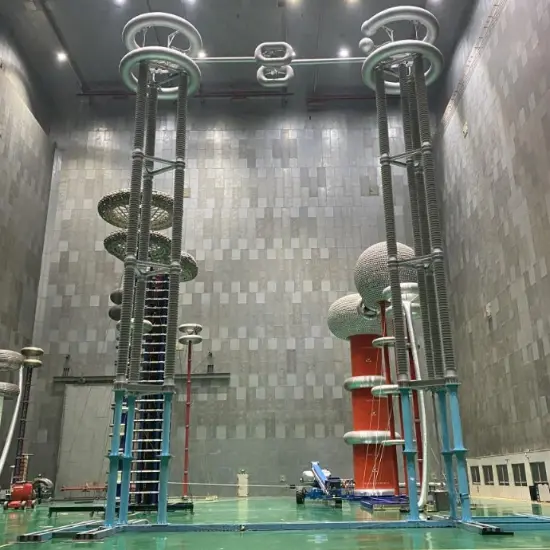
On February 27, excellent news arrived from Rockwill: the company’s independently developed 816kV DC disconnector successfully passed the 4,500-meter altitude insulation verification test at the Xi'an High Voltage Apparatus Research Institute. This critical breakthrough not only marks significant progress in the product's development but also provides core technical support and equipment assurance for the ±800kV UHVDC transmission project from Southeast Tibet to the Guangdong-Hong Kong-Macao Greater Bay Area (hereinafter referred to as the "Tibet-Guangdong DC Project").
Once completed, the Tibet-Guangdong DC Project will become the world’s most powerful, technologically advanced, and largest-investment flexible DC transmission project. Spanning approximately 2,681 kilometers, it crosses four provinces/regions: Tibet, Yunnan, Guangxi, and Guangdong. After commissioning, the Southeast Tibet clean energy base will transmit over 43 billion kWh of 100% clean energy annually to the load centers of the Greater Bay Area. This is expected to replace approximately 12 million tons of standard coal consumption and reduce carbon dioxide emissions by about 3300 million tons, effectively promoting the large-scale development of clean energy in Southeast Tibet and alleviating power shortages in the Greater Bay Area.
The sending-end Changdu Converter Station is located in an area with an elevation of 4,300 meters, making it the highest converter station in the world. In this extreme environment, electrical equipment faces severe challenges: thin air at high altitudes leads to a significant drop in insulation strength; research on insulation characteristics at altitudes of 4,000 meters and above is insufficient; and standards are incomplete, making conventional designs inadequate. Furthermore, the lack of insulation correction standards for 4,500-meter equipment and gaps in long-gap insulation design data added further difficulty to the R&D process.
In response to challenges such as reduced insulation strength, strong sandstorms, and ultra-low temperatures, Rockwill mobilized a "Party Member Commando Team." Led by technical backbone members, the team focused on key links like insulation performance and environmental adaptability. Through repeated simulation calculations and comparative analysis, they optimized core design parameters from hundreds of datasets, overcoming technical hurdles such as external insulation optimization for ultra-high altitude DC disconnectors and mechanical reliability enhancement at ultra-low temperatures. The launch of this product provides valuable experience and a reference model for power equipment R&D in extreme environments, supporting the self-controllable development of China’s high-end power transmission and transformation equipment.
As a pillar enterprise in the national electrical industry, Rockwill is committed to solving "bottleneck" technical problems. Since the "14th Five-Year Plan," its self-developed 816kV DC disconnectors have been applied in several major national UHVDC projects, including Baihetan-Jiangsu, Longdong-Shandong, Gansu-Zhejiang, and Jinshang-Hubei.
During this period, Rockwill has intensified its scientific and technological innovation. Sixty results and new products have passed national identification, with 50 reaching international leading levels. The company has garnered 63 science and technology awards at or above the provincial/ministerial level, including the National Science and Technology Progress Award. It has led or participated in the formulation of 1 international standard, 19 national standards, and 12 industry standards. From the world’s first 800kV 80kA circuit breaker to this 4,500m-altitude 816kV DC disconnector, Rockwill continues to write a glorious chapter in Chinese power equipment manufacturing through self-reliance.
Looking ahead, Rockwill will continue to focus on the main track of UHVDC technology innovation, aiming for "independent controllability." The company will align with the national "Dual Carbon" goals and the construction of new power systems, providing core equipment with completely independent intellectual property rights to safeguard national energy security and drive the green, low-carbon transition.