Background
During urban power grid upgrades, limited land resources present a core challenge. Traditional GIS equipment occupies significant vertical space due to the separate structures of current transformers (CTs) and grounding switches, becoming a bottleneck in substation miniaturization design.
Solution: Modular Integrated Design
This solution innovatively deeply integrates CT functionality into the grounding switch operating mechanism, achieving spatial reuse and performance breakthroughs:
Space-Efficient Reuse:
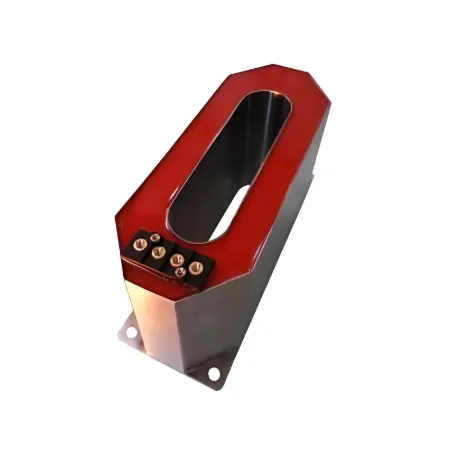
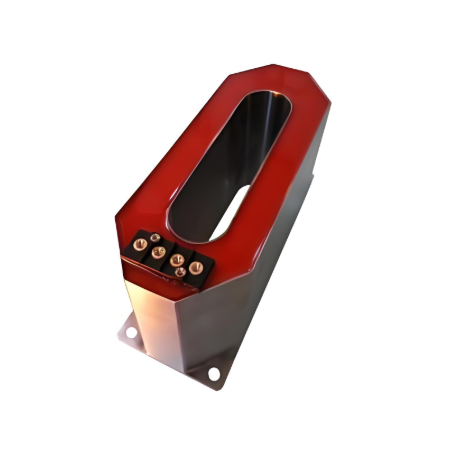
Embedded CT Coil: Removes the traditional standalone CT insulator, embedding high-precision measurement coils directly within the inner cavity structure of the grounding switch's insulated operating rod.
GIS Enclosure Magnetic Circuit Closure: Breakthrough utilization of the GIS equipment's high-strength metal enclosure itself as the core low-resistance path for CT magnetic flux, forming a complete closed magnetic circuit. Vertical space occupation is significantly reduced.
Precise Magnetic Circuit Compensation:
Dual-C Laminated Silicon Steel: To address potential magnetic field distribution non-uniformity caused by non-axisymmetric equipment structure (estimated linearity deviation ≤5%), the core employs dual-C type 0.23mm high-permeability silicon steel sheet laminated modules.
Directed Magnetic Flux Guidance: The symmetric C-shaped structure design precisely compensates for magnetic circuit asymmetry, ensuring current measurement linearity deviation remains stable at ≤0.5% under both steady-state and transient conditions (up to 40kA peak), meeting Class 0.2S accuracy requirements.
Contact Synchronization Monitoring:
Dual Hall-Effect Sensor Synchronization: High-sensitivity Hall-effect sensor arrays are embedded at key transmission nodes of the grounding blade's power linkage.
State Synchronized Output: Real-time collection of the blade's open/close mechanical position status, achieving high-precision time synchronization (timestamp alignment accuracy ≤1ms) with the phase current signal output from the CT.
Core Scenario Value: Urban Compact GIS Substations
Spatial Compression Breakthrough: Equipment vertical structure depth reduced by 1.2 meters directly, driving overall substation layout optimization. Average substation footprint successfully reduced by 30% (e.g., 220kV GIS distribution area).
Lifespan Consistency Design: Integrated structure simplifies the transmission chain. CT and grounding switch share core moving parts (e.g., operating rod bearing system). Validated over 10,000 full-capacity open/close operation cycles, achieving synchronized mechanical lifespan targets.
Intelligent O&M Enablement: Highly reliable millisecond-level synchronization of Hall position signals and CT data provides unprecedented device-level data support for analyzing grounding switch operation transient currents and assessing arc reignition risks.
Summary of Technical Advantages
Dimension
Traditional Solution
This Integrated Solution
Key Improvements
Equipment Structure
CT and grounding switch independent
Embedded CT in operating rod, reused enclosure magnetic circuit
Vertical height reduced by 1.2m
Footprint
Large base footprint
Optimized overall layout
Saves 30% area
Measurement Performance
Susceptible to proximity effects
Dual-C silicon steel compensates asymmetric magnetic field
Steady/Transient accuracy ≤0.5%
Lifespan Coordination
Independent parts, unsynchronized lifespan
Shared transmission chain, optimized design
Synchronized operational lifespan to 10,000 cycles
Condition Monitoring
Position and current monitoring separate
Hall sensors provide real-time synchronized phase data
Provides millisecond-level operational transient data