1.Challenges:
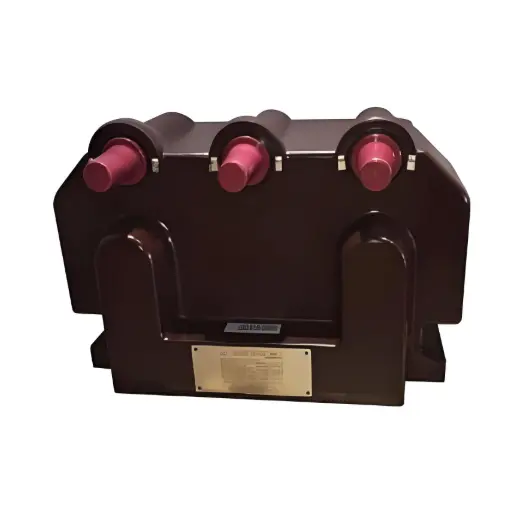
Traditional voltage transformers (VTs) within GIS equipment often require high-frequency manual inspections, presenting three core pain points:
Delayed Detection of Potential Failures: The enclosed gas-insulated structure (GIS) makes early fault indicators like internal partial discharge (PD), minor SF6 gas density drops, and abnormal temperature rises difficult to visually detect or find via conventional methods.
Low Response Efficiency: Long manual inspection cycles (weeks/months) mean sudden failures like insulation breakdown or gas leaks often occur without warning, leading to unplanned outages.
High O&M Costs: Preventive testing and routine maintenance consume significant manpower and resources, with risks of both over-maintenance and under-maintenance.
2. Solution: IoT-Based Predictive Maintenance System
Addressing these challenges, this solution establishes an intelligent monitoring network covering the entire lifecycle of GIS-VTs:
(1) Comprehensive Sensing Layer:
Precision Deployment: Embed/attach high-precision sensors to key VT nodes (e.g., high-voltage connections, near spacers, gas compartment body):
Partial Discharge (PD) Sensors: High-frequency CT or Ultra-High-Frequency (UHF) sensors detect real-time insulation degradation signals.
Gas Density & Moisture Sensors: Continuously track changes in SF6 gas pressure, density, and moisture content.
Temperature Sensors: Monitor abnormal temperature rise points at conductor connections and enclosures.
Reliable Transmission: Sensor data is transmitted in real-time via device-embedded IoT gateways using industrial-grade wireless/fiber optic networks to a cloud monitoring platform, ensuring data timeliness and integrity.
(2) AI-Powered Analytics Platform:
Big Data Fusion: The platform integrates real-time monitoring data with multi-dimensional information such as historical operation/maintenance records, fault databases of similar equipment, and environmental conditions (load, temperature).
AI Diagnostic Engine:
Feature Extraction: Automatically identifies PD patterns (e.g., floating discharges, surface discharges), gas leakage trend curves, and temperature anomaly correlation maps.
Deep Learning Prediction: Employs algorithms like LSTM and Random Forest to build fault prediction models, quantitatively assessing component health indices (HI) and remaining useful life (RUL).
Precise Early Warning: Predicts critical failures like "insulator surface discharge degradation" or "gas micro-leakage due to seal ring aging" at least 7 days in advance, with an early warning accuracy rate exceeding 92%.
(3) Visualized O&M Dashboard:
Panoramic Visualization: Provides multi-level (GIS equipment, bay, individual VT) health status overviews, supporting one-stop management of asset records, real-time data, historical trends, and alarm information.
Intelligent Work Order Dispatch: Generates and dispatches precise maintenance work orders based on warning levels and prediction results (e.g., "Phase A VT: Recommend PD retesting and seal inspection within 3 days"), optimizing resource allocation.
Knowledge Accumulation: Automatically generates fault analysis reports, continuously builds an O&M knowledge base, and drives model optimization.
3. Key Benefits
Indicator
Improvement
Realized Value
Equipment Reliability
≥40% reduction in sudden failure rate
Prevents major outages, ensures grid backbone stability
O&M Efficiency
35% reduction in unplanned repair orders
Staff focus on critical areas, efficiency multiplied
O&M Costs
≥25% reduction in overall O&M costs
Reduces ineffective inspections & over-maintenance, optimizes spare parts inventory
Equipment Availability
≥99.9% annual comprehensive availability
Supports grid's high power supply reliability targets
Decision Making
Data-driven precision decisions
Transitions from "scheduled maintenance" to "precision maintenance", extends equipment life
4. Reference Case
500kV Hub Substation GIS Equipment Cluster: Following system deployment, successfully provided early warnings for 3 potential VT insulation faults (2 floating discharges, 1 gas compartment seal anomaly), with lead times of 8-14 days, averting significant economic losses. Annual maintenance costs reduced by 28%, and equipment forced outage frequency dropped to zero.