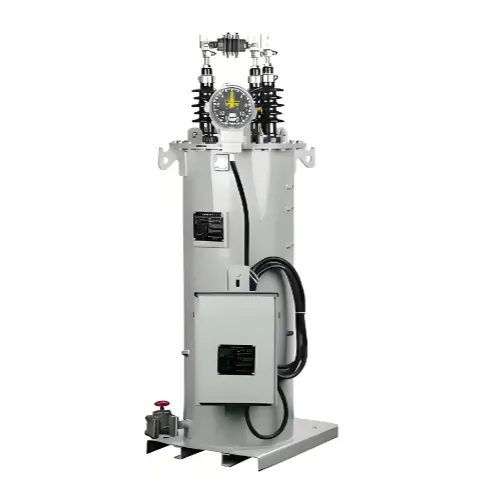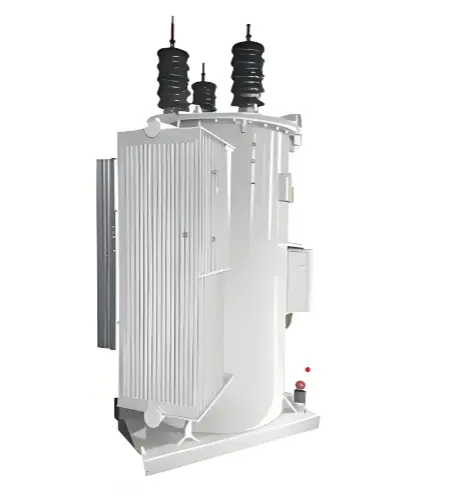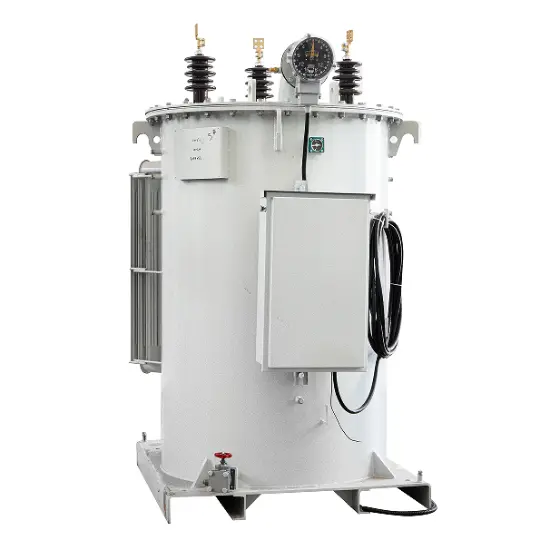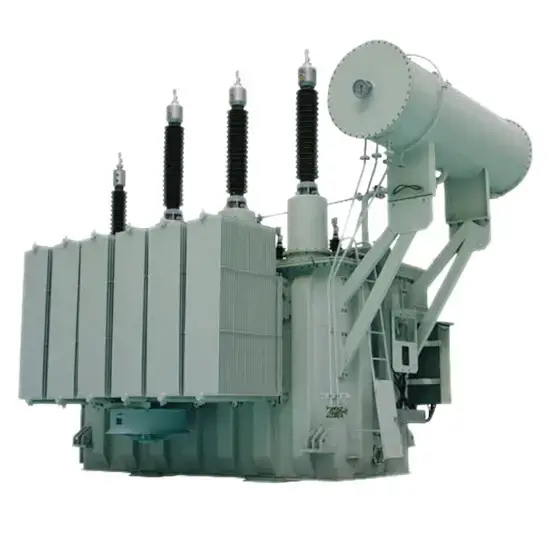
Ⅰ. Core Perspective
Addressing heat accumulation challenges in special transformers under severe operating conditions, this solution proposes systematic thermal dissipation and temperature control optimization strategies:
Extreme Loading: Continuous overload, impact loads.
High Harmonic Pollution: Additional losses caused by non-linear loads.
High Ambient Temperatures: Outdoor/enclosed spaces with sustained ambient temperatures≥40°C.
II. Key Solution Points
(A) Precision Thermal Simulation & Design Optimization
Thermal Digital Twin Model
Utilizes CFD software (FloTHERM/Star-CCM+) to build a 3D thermal-fluid coupling model.
Accurately simulates oil flow paths, winding hot-spot distribution, and radiator efficiency.
Outputs optimized schemes: Achieves >15% hotspot temperature reduction through heat dissipation structure adjustments.
(B) Customized Cooling System Design
Cooling Method
Technical Solution
Applicable Scenarios
Natural Cooling
► Biomimetic heat sink design (fin density gradient distribution)
► Blackbody radiation treatment on tank surface (ε≥0.95)
Standard load, low ambient temperature
Forced Air Cooling
► Vortex axial fan array (IP55 protection rating)
► Temperature-controlled start/stop strategy (50°C start / 40°C stop)
High-altitude/high-temperature environments, periodic overloads
Forced Oil Circulation
► Magnetic levitation oil pump (energy consumption <30% of conventional pumps)
► Air-cooled: Variable-frequency fans + aluminum corrugated radiators
► Water-cooled: Plate heat exchangers (ΔT≤3K)
Submerged arc furnace transformers, traction rectifier transformers, marine transformers
Heat Pipe Assisted
► Embedded ultra-thermal conductive heat pipes (thermal conductivity >5000 W/m·K)
► Targeting local hotspots (core clamps, HV leads, etc.)
Space-constrained high-density winding regions
(C) Oil Flow Control Optimization
Enhanced Oil Guiding Design:
A[Oil Inlet] --> B[Silicon Steel Guide Channels]
B --> C[Axial Winding Oil Ducts]
C --> D[Hotspot Reinforced Spray Nozzles]
D --> E[Top Oil Outlet]
Achieves ≥300% increase in oil flow velocity in hotspot regions, resulting in 8-12K temperature reduction.
(D) Intelligent Temperature Control System
Functional Module
Technical Implementation
Monitoring System
► Distributed Optical Fiber Temperature Sensing (±0.5°C accuracy)
► Real-time winding hotspot reconstruction algorithm
► Ambient temperature & humidity compensation monitoring
Control Strategy
► PID stepless speed control for fans/oil pumps (20-100%)
► Load-temperature linkage control (I²;T protection model)
Smart IoT
► IEC 61850 communication protocol
► Alarm thresholds: 3-level alarms triggered by hotspots >105°C
► Real-time display of life consumption
III. Target Outcomes & Verification Standards
Temperature Control
Winding Hotspot Temperature: ≤95°C (rated load) / ≤115°C (2-hour emergency overload)
Top Oil Temperature Rise:≤45K (compliant with IEC 60076-7)
Lifespan Assurance
Based on the 10°C Rule (Montsinger's Rule):L = L₀ × 2^[(98°C - T_hotspot)/6]
Ensures insulation thermal aging <20% over the 30-year design lifespan.
Efficiency Improvement
Reduced No-Load Losses: 12% reduction (low eddy current design)
Cooling System Energy Consumption: <5% of total losses
IV. Typical Application Scenarios
Special Transformer Type
Thermal Management Solution Combination
Arc Furnace Transformers
Forced Oil Circulation + Water Cooling + Heat Pipe Assistance
Traction Rectifier Transformers
Forced Air Cooling + Intelligent Multi-stage Speed Control
Offshore Wind Power Transformers
Sealed Heat Pipe Cooling System + Triple-protection Coating (Anti-corrosion/Anti-fouling/Anti-moisture)
Data Center Cast-Resin Transformers
Fan Group Control + CFD-based Airflow Optimization