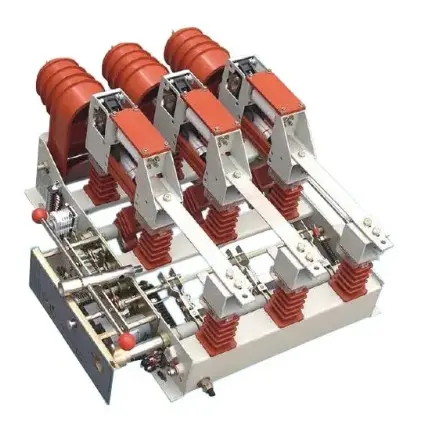
I. Pain Point Focus: Evidence from Penang Port (6 Units Jammed, 3 Units with Over-Temperature)
Core Problem: In Southeast Asian coastal regions (e.g., Penang, Malaysia; Jakarta, Indonesia) and port terminals, high concentrations of $Cl^{-}$ in the air create aggressive salt-spray environments. This causes severe corrosion to metallic components such as the enclosure, operating mechanism, and contacts of Vacuum Load Break Switches (LBS). Consequences include perforated rusted enclosures, worn mechanism gears, and spring fatigue, leading to mechanical jamming and incomplete switching operations. Furthermore, contact corrosion increases contact resistance, causing temperature rises to exceed standards or even resulting in contact welding, which impairs arc-extinguishing performance and triggers arcing failures. This increases O&M costs and compromises power reliability.
Typical Case: In a port distribution network in Penang, Malaysia, 15 vacuum LBS units deployed near the terminal suffered long-term salt-spray erosion. Within two years of commissioning, all enclosures exhibited varying degrees of rusting. Specifically, 6 units experienced mechanism jamming due to corrosion, rendering them unable to switch normally. Three units suffered from excessive contact temperature rise (reaching 88K, far exceeding the≤75K standard). Maintenance costs exceeded 60,000 RMB annually due to frequent component replacements. Inspections revealed that the switches lacked anti-salt-spray coatings on metal parts and utilized primitive sealing structures, allowing salt spray to easily infiltrate and corrode core components.
II. Triple Protection: Synergistic Upgrade of Materials, Sealing, and O&M
Addressing the core pain points of metallic corrosion, mechanism jamming, and contact failure in high salt-spray environments, this solution focuses on protection upgrades and component optimization to comprehensively block salt-spray intrusion:
Enclosure and Sealing Protection Upgrade: Standard carbon steel is replaced with 316L stainless steel or hot-dip galvanized steel (zinc layer thickness≥ 85) to enhance resistance to Cl-corrosion. Surfaces utilize a multi-layer spray process; for coastal areas, Polyvinylidene Fluoride (PVDF) coatings (thickness ≥70K) are prioritized to ensure salt-spray resistance exceeds 1,000 hours. The protection rating is elevated to IP55 or higher. Cabinet joints and cable entries utilize silicone rubber gaskets with double sealing rings, and secondary sealing is applied to entry holes to prevent salt-spray infiltration.
Metallic Component Corrosion Optimization: Metal parts such as the operating mechanism and contacts utilize Dacromet coatings (zinc-chromium alloy, thickness 8–12), which provide ≥1,000 hours of salt-spray resistance with zero risk of hydrogen embrittlement. Contacts are made of copper-chromium (CuCr) alloy with silver plating (thickness ≥20) to enhance wear and corrosion resistance. Additionally, conductive anti-corrosion grease is applied to form a hydrophobic film, isolating the metal from salt spray and moisture.
Targeted O&M Support: In coastal salt-spray scenarios, specialized monthly inspections are conducted, focusing on metal rust and seal aging. Salt-spray residues are cleaned from switch surfaces quarterly, and anti-corrosion re-inspections of metal parts are performed annually to replace aged coatings and seals promptly. Spare parts warehouses are established in key Southeast Asian coastal regions to ensure the rapid replacement of any corrosion-damaged components.
III. Empirical Results: Zero Corrosion Failures | O&M Costs ↓60% | Service Life 10+ Years
Implementing this solution effectively blocks high salt-spray erosion in Southeast Asia. The corrosion rate of metallic components is significantly reduced, completely eliminating mechanical jamming and contact failures. Based on the case evidence, the frequency of component replacement can be reduced by over 70%, annual O&M costs are lowered by 60%, and the equipment service life is extended to more than 10 years. This ensures the long-term stable operation of vacuum LBS in coastal high salt-spray environments and improves power supply reliability.