Project Background
Located in the Western Pacific typhoon belt, the Philippines experiences over 20 tropical cyclones annually, with approximately 5 developing into highly destructive typhoons (e.g., Typhoon Haiyan in 2013 caused 7,500 casualties, and Typhoon Odette in 2021 disabled 95 transmission lines). Typhoons bring multiple threats to power infrastructure through heavy rainfall, flooding, salt spray corrosion, and strong winds:
Electrical Failures: Flooding submerges substations, causing short circuits in High Voltage Disconnect Switch systems, while humidity triggers insulation failure.
Structural Damage: Strong winds topple transmission towers, deforming and jamming mechanical components of High Voltage Disconnect Switch installations.
Voltage Fluctuations: Unstable voltage during post-disaster grid restoration (440V industrial voltage in the Philippines vs. 380V for Chinese equipment) accelerates High Voltage Disconnect Switch wear.
Conventional High Voltage Disconnect Switches lack sufficient disaster resilience, necessitating targeted upgrades to enhance grid robustness.
Solution
I. Environment-Adaptive Design
Corrosion Resistance and Sealing Enhancement
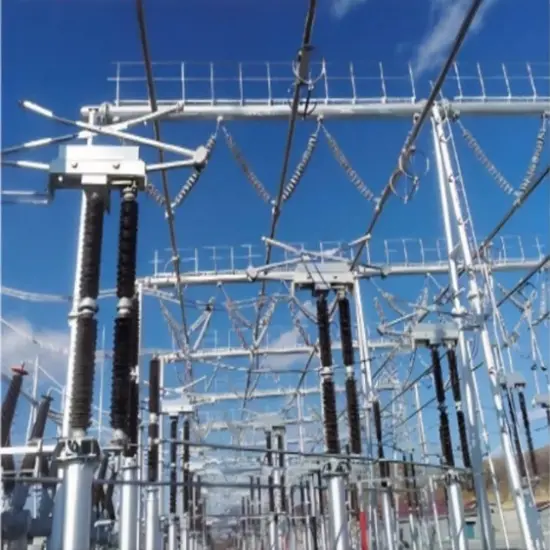
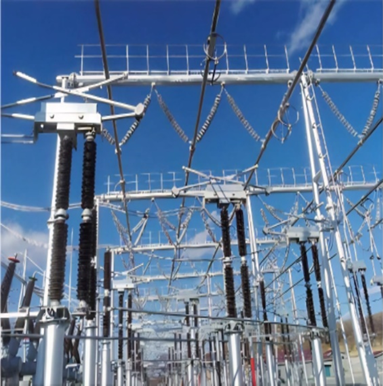
Replaced porcelain insulators with composite silicone rubber insulators for High Voltage Disconnect Switches, increasing bending strength by 40% and resisting salt spray corrosion (critical for coastal areas).
Upgraded High Voltage Disconnect Switch enclosure to IP68 rating, filled with dry nitrogen to prevent flood infiltration and condensation.
Wind and Seismic Resistance
Installed aerodynamic spoilers on High Voltage Disconnect Switch towers to reduce wind load by 30%.
Added 3D hydraulic shock absorbers to High Voltage Disconnect Switch bases to withstand Category 16 typhoons and Magnitude 8 earthquakes.
II. Smart Monitoring and Rapid Disconnection System Functional Module Technical Parameters Role During Disasters Micro-meteorological sensors Real-time wind/rain/water monitoring Activates High Voltage Disconnect Switch protection mode pre-landfall Millisecond-level breaking mechanism Response time ≤20ms Instantly cuts circuits via High Voltage Disconnect Switch Self-diagnosing IoT platform 4G/satellite data transmission Locates High Voltage Disconnect Switch faults post-disaster III. Modular Rapid-Replacement Design
Plug-in contact units: Pre-encapsulated High Voltage Disconnect Switch cores cut replacement to 4 hours.
Voltage-adaptive module: Integrated 440V/380V transformer ensures High Voltage Disconnect Switch compatibility.
IV. Supporting Defense Systems
Grid-Based Deployment: High Voltage Disconnect Switch density increased by 50% in high-risk areas (e.g., Luzon, Visayas).
Digital Twin Platform: Simulates typhoon impacts on High Voltage Disconnect Switch networks.
Outcomes
Enhanced Disaster Resilience
During Typhoon Taozi (2024), High Voltage Disconnect Switches reduced failure rates by 82% in Luzon pilot zones.
High Voltage Disconnect Switches prevented 23 flooding-induced short circuits, avoiding cascading blackouts.
Economic Efficiency Optimization Indicator Before After Average repair time 72 hours 8 hours Annual maintenance cost $2.8M $0.9M Equipment lifespan 8 years 15 years
Source: NGCP 2024 Annual Report
Extended Social Benefits
High Voltage Disconnect Switches supported emergency power for 129 evacuation sites.