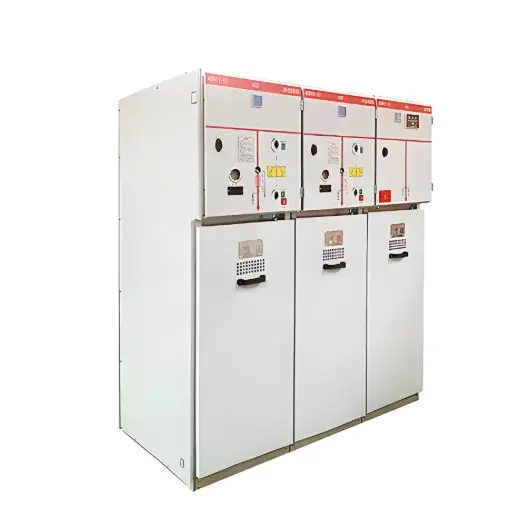
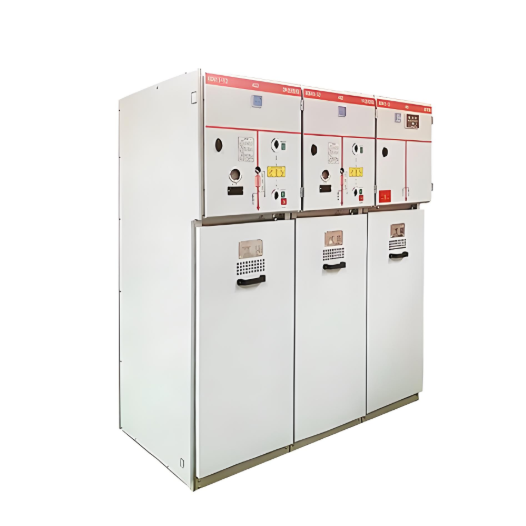
In-depth Solutions for Common Issues in SF6 Ring Main Units (RMUs)
The stable operation of SF6 high-voltage RMUs is critical to grid safety. Addressing typical problems exposed during long-term operation, and based on industry practices and technical specifications, the following systematic solutions are proposed:
I. Comprehensive Gas Leakage Management Plan
Phenomenon & Risk:
SF6 gas leakage reduces dielectric strength (breakdown voltage drops by over 30% when pressure falls below 0.4MPa).
Arc decomposition products (e.g., SF4, SOF2) pose a threat to personnel safety.
Proactive Defense System:
Countermeasure
Standard
Frequency / Method
Laser Imaging Leak Detection
DL/T 1145
Annual census + Special inspections after rain
Dual-Channel Density Relay Monitoring
IEC 62271
Real-time alarm threshold setting (0.55MPa at 20°C)
Complete Sealing Component Retrofit
GB/T 11023
Use fluororubber O-rings + metal bellows seals
Emergency Response Drills
Q/GDW 1799.2
Quarterly drills (including positive pressure breathing apparatus operation)
II. Strategy for Eradicating Mechanical Operation Failures
Failure Mechanisms:
Mechanism sticking/jamming (80% caused by lubricant hardening).
Micro-switch failure.
Operation refusal/maloperation caused by secondary wiring oxidation.
Precision Maintenance Plan:
Semi-Annual Maintenance: Encompasses two critical tasks: 1) Disassembly and refurbishment of the operating mechanism; 2) Coil resistance testing. These tasks enable timely assessment of the equipment's fundamental condition.
Intelligent Monitoring: Focuses on in-depth analysis of operational status, specifically including: 1) Analysis of open/close coil current waveforms; 2) Assessment of the energy storage motor status. This achieves precise control over equipment operation.
Preventive Testing: Utilizes specialized instruments to ensure test accuracy, employing mechanical characteristic testers and micro-ohm meters for contact resistance testing. This provides robust data support for safe and stable operation.
III. Insulation Degradation and Overheating Prevention & Control
Comprehensive Protective Measures:
Insulation Refurbishment:
Apply moisture-proof RTV coating to epoxy barrel surfaces (withstands 40% higher voltage).
Replace porcelain bushings with silicone rubber bushings (impact resistance strength increased by 3 times).
Thermal Management Upgrade:
Heat Dissipation Power = 6.5×10⁻³×(T_cabinet - 25)³ // Optimization Measures:
Install IP55 centrifugal fans at the cabinet top (ΔT reduced by 8℃).
Silver plating treatment of copper busbars (contact resistance reduced by 35%).
Embed heat pipe radiators into the contact assemblies.
IV. Construction of Intelligent Operation & Maintenance (O&M) System
Technology Module
Function Implementation
Benefit
UHF Partial Discharge (PD) Monitoring
Captures 300MHz-1.5GHz signals
Provides 3-month early warning for insulation defects
Pressure Cloud Map Analysis
Leakage prediction based on temperature compensation
Increases leak location efficiency by 70%+
Mechanical Life Assessment
Stress analysis based on cumulative switching operations
Achieves >90% mechanism failure prediction rate
Validation via Typical Case
After implementing this solution at a State Grid 220kV substation:
▶ Annual SF6 leakage rate dropped from 0.8% to 0.05%.
▶ Number of mechanical failures decreased by 82% (from 2021 to 2023).
▶ Peak temperature rise reduced from 75K to 48K (IEC 60298).
Key O&M Implementation Points
Establish a full life-cycle equipment database (including spare parts life warnings).
Promote live detection techniques to replace scheduled outage testing.
Deepen the application of Condition-Based Maintenance (CBM) decision systems.