1. The Hidden Cost Dilemma of Traditional Gas Insulation
In power systems, SF₆ (Sulfur Hexafluoride) has long been the core medium for high-voltage switchgear due to its superior insulation and arc-quenching performance. However, its high Global Warming Potential (GWP=23,900) and stringent maintenance requirements are becoming an unbearable burden for enterprises. On one hand, SF₆ leaks not only risk heavy environmental fines (e.g., up to €500,000 under EU F-Gas regulations) but also require significant manpower and resources for regular leak detection, gas recovery, and purification. On the other hand, the soaring cost of SF₆ cylinders (over $1,000 per cylinder), complex logistics, and increased maintenance frequency due to gas contamination drive up the Total Cost of Ownership (TCO).
In contrast, Nitrogen (N₂), as a naturally occurring inert gas, is redefining the operational logic of power equipment with its characteristics of "zero environmental risk, zero leakage concern, and zero recovery requirement." It shifts the focus from "passive gas management" to "proactive equipment reliability." This solution elaborates on how nitrogen insulation builds sustainable cost competitiveness through its "maintenance-free" advantages.
Cost Item
SF₆ Solution (10k RMB)
Nitrogen Solution (10k RMB)
Savings
Initial Purchase
80
85 (incl. Generator)
-6%
Gas Purchase (20 Years)
30 (incl. Top-up)
0
100%
Leak Detection & Maint.
25
2 (Mechanical only)
92%
Environmental Penalty Risk
15 (10% prob.)
0
100%
Decommissioning
10
0
100%
Total
160
87
45.6%
Note: Data based on typical industry projects; indirect losses from unplanned downtime not included.
2. Core Advantages: The "Three-Zero" Maintenance System of Nitrogen Insulation
- Zero Leakage Concern: Eliminating Environmental & Compliance Risks at the Source
-
- Physical Properties Ensure Intrinsic Safety: Nitrogen constitutes 78% of the atmosphere. Even if a micro-leak occurs, it has no negative impact on the environment, completely avoiding greenhouse gas emission issues associated with SF₆. According to regulations on fluorinated greenhouse gases, equipment using nitrogen insulation does not require online leakage monitoring systems, directly saving hardware investment (approx. 100k-300k RMB per set) and annual calibration costs.
- Simplified Sealing Design: Nitrogen insulated equipment typically uses "atmospheric pressure sealing" or "micro-positive pressure filling," eliminating the need for the high-pressure sealing state required by SF₆. For instance, a 110kV nitrogen-insulated transformer project showed that its sealing structure only needed to meet IP67 standards, rather than the helium mass spectrometer leak detection standard required for SF₆ (<1×10⁻⁹ Pa·m³/s). This reduced on-site airtightness testing time from 4 hours to 30 minutes, cutting labor costs by 80%.
- Zero Gas Recovery: Reshaping Economics of Decommissioning & Overhaul
-
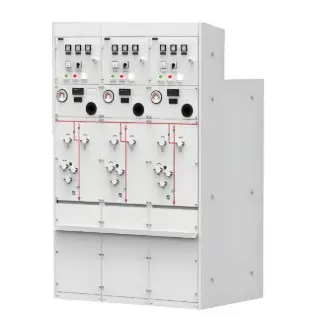
- Direct Cost Savings from Non-Recovery: SF₆ equipment requires specialized recovery units to liquefy and store gas during maintenance or decommissioning, with a single recovery costing about 30% of the new gas price (approx. 20k RMB for a 40.5kV switchgear). Nitrogen insulated equipment can vent directly to the atmosphere (environmentally compliant) or be reused after simple filtration, completely eliminating rental, transport, and disposal fees for recovery equipment. Estimates suggest a single 12kV Ring Main Unit (RMU) can save over 150k RMB in gas-related expenses over its lifecycle.
- Indirect Benefits of Avoiding Cross-Contamination: SF₆ decomposes into toxic byproducts (e.g., SO₂, HF) under arcing, which corrode internal components and degrade insulation. Nitrogen is chemically extremely stable and does not generate harmful substances even under discharge conditions, ensuring a clean internal environment. A semiconductor factory case study showed that switching to nitrogen-insulated GIS reduced unplanned downtime due to gas contamination from 3 times/year to 0, saving over $2 million annually in production losses.
- Zero Consumable Dependency: Breaking Supply Chain & Price Volatility Shackles
-
- Infinite Resource Availability: Nitrogen can be separated from air via on-site nitrogen generators. For large substations or industrial parks, a small generator (investment approx. 100k RMB) achieves self-sufficiency, with operating costs merely 1/10th of commercial nitrogen. This "produce-on-demand" model eliminates safety hazards and management burdens associated with cylinder transport and storage.
- Predictable Long-term Costs: SF₆ prices fluctuate wildly due to global capacity and environmental policies (e.g., a 40% surge in 2023 due to the European energy crisis). As an industrial staple, nitrogen costs are linked only to electricity consumption, offering high stability. For budget-sensitive projects, this predictability significantly reduces financial risk.
3. Technical Implementation: Full-Chain Assurance from Theory to Engineering
To ensure the "zero maintenance" advantage lands effectively, this solution proposes the following key technical paths:
Insulation System Optimization: Engineering Wisdom to Bridge Performance Gaps
Addressing the fact that nitrogen's insulation strength is only 1/3 that of SF₆, we achieve performance parity through "composite insulation + structural innovation":
- Increased Electrical Clearance: Expanding contact gap from 60mm (SF₆) to over 150mm, combined with high-strength insulation covers and PTFE partitions to block discharge paths, achieving a lightning impulse withstand voltage of 125kV (comparable to SF₆).
- Vacuum Arc-Quenching Synergy: Vacuum Arc-Quenching Synergy: Integrating vacuum interrupters to handle current breaking, while nitrogen solely handles insulation isolation. This leverages vacuum technology's arc-quenching strengths while bypassing nitrogen's weaknesses. Field data shows this scheme reliably breaks 20kA short-circuit currents with pre-strike times controlled within 1ms.
Mechanical Structure Adaptation: Dynamic Balance Under Spatial Constraints
To meet the State Grid's 420mm standard cabinet width, lightweight designs for three-position disconnectors are implemented:
- Extended Nylon Main Shaft: Optimizing rotational inertia to boost closing speeds to over 4m/s, ensuring rapid closure despite larger gaps and suppressing contact ablation.
- E2-Class Grounding Contacts: Lower disconnectors use enhanced contacts capable of withstanding 5 short-circuit making operations without additional maintenance.
Intelligent Monitoring Empowerment: From Preventive to Predictive Maintenance
While nitrogen itself needs no maintenance, equipment status requires real-time monitoring:
- Built-in Displacement Sensors: Collect closing speed curves in real-time; automatically trigger alerts if deviations occur (e.g., <3.8m/s), preventing failures due to mechanical wear.
- Temp-Humidity Linkage:Interlock sensors with ventilation systems to maintain nitrogen purity above 99.9%, preventing insulation degradation caused by condensation.
4. Application Scenarios & Implementation Suggestions
Priority Areas
- Urban Distribution Networks: Nitrogen insulation avoids resident complaints and regulatory pressure from SF₆ leaks in densely populated areas.
- Renewable Energy Stations: For wind/solar farms in remote locations, nitrogen's self-sufficiency solves cylinder transport issues and adapts to wide temperature ranges (-40°C~70°C).
- Data Centers: High reliability requirements mean nitrogen's non-toxicity ensures personnel safety during leaks, avoiding SF₆ asphyxiation risks.
Implementation Steps
- Phase 1 (1-3 Months): Assess leakage risks of existing SF₆ equipment and prioritize retrofitting (e.g., aging equipment, high-leak sites).
- Phase 2 (3-6 Months): Pilot nitrogen-insulated RMUs and deploy intelligent monitoring to accumulate operational data.
- Phase 3 (6-12 Months): Develop corporate technical specifications for nitrogen equipment and push for supply chain localization to reduce procurement costs.
5. Conclusion: An O&M Revolution from "Cost Center" to "Value Creation"
The essence of the nitrogen insulation solution is a paradigm shift from "gas-centric" to "equipment-centric" operation and maintenance. It transforms gas from a "consumable" requiring continuous investment into a "background condition" requiring no attention, allowing enterprises to focus resources on improving grid reliability and intelligence. Driven by "Dual Carbon" goals and digital transformation, this "zero maintenance" philosophy represents not just cost savings, but an inevitable choice for the power industry's green, efficient, and sustainable development.
As a maintenance head at a provincial grid company stated: "When we no longer have to worry about 'gas leaks,' we can truly focus on 'how to make the grid safer.'" This is perhaps the most profound insight nitrogen insulation brings to the industry.