Distribution utilities, rural electrification agencies and EPCs delivering last-mile grid expansion across South Asia and East Africa are facing unique bottlenecks in rural feeder rollout.
Under large-scale national electrification schemes such as India’s RDSS, project budgets are tightly controlled, field construction teams are less skilled, and massive batch delivery schedules leave little buffer for complex commissioning.
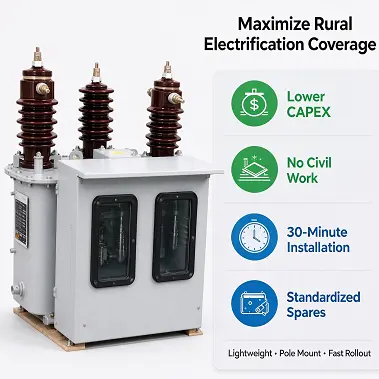
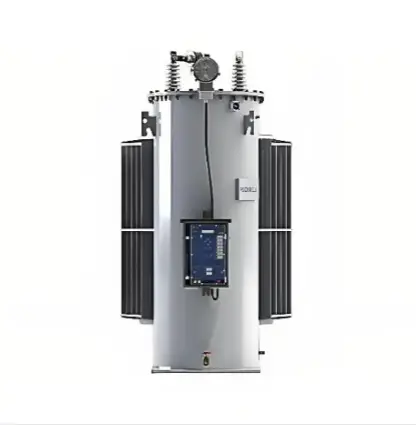
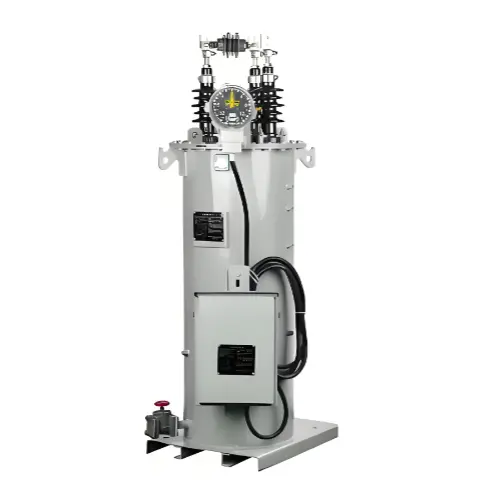
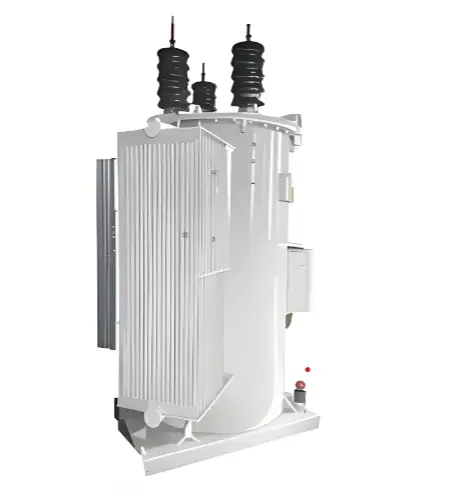
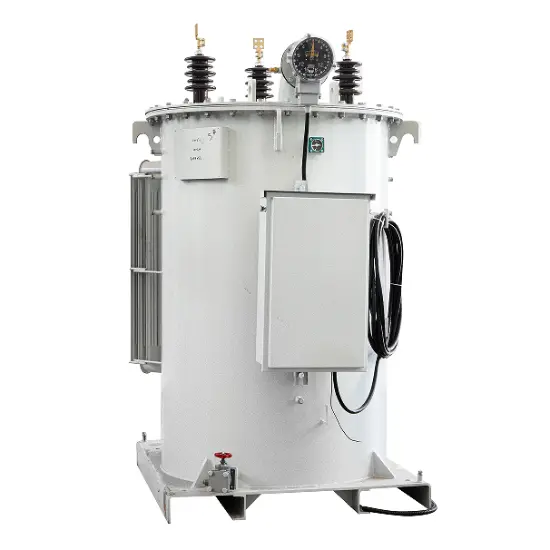
This low-cost compact pole-mounted metering unit is purpose-built for rural, low-income grid zones and remote island feeders. It addresses three core pain points: tight budget constraints, limited on-site construction capability, and weak local spare parts & training support, from technical, economic and whole life cycle dimensions.
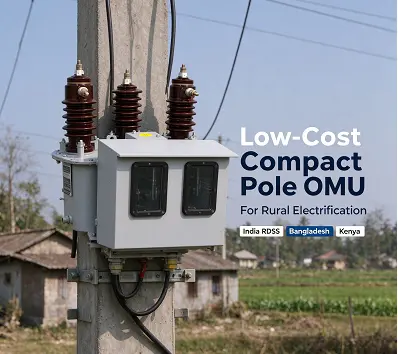
Oil Immersed Combined CT PT Metering Unit
1.Key Field Pain Points
- Extremely tight project budget, high pressure on per-unit capital expenditure Most rural electrification programmes are funded by government grants or multilateral development bank loans. Expensive heavy-duty metering cubicles cannot be scaled up for thousands of scattered rural tapping points. Traditional bulky pole-mounted metering units drive up per-point investment and reduce the total number of households that can be connected under the fixed budget envelope.
- Unskilled local construction crews, requirement for pole mounting without civil foundation Rural job sites are scattered across villages, hills and remote islands. Concrete foundation, excavation and formwork are impractical and costly. Local installation teams often lack advanced HV commissioning skills. Conventional metering units require complicated alignment, wiring and groundwork, which easily triggers installation mistakes and delayed energization.
- Mass rollout with tight delivery schedules, inadequate local spare stock and training capacity National electrification tenders usually require delivery of hundreds or thousands of units within short windows. Local service hubs are sparse, spare parts inventory is minimal, and technicians receive limited training. Customised non-standard hardware creates stocking chaos and slows fault response across wide rural service areas.
Supplementary life-cycle pain point: Many low-cost metering options only focus on upfront purchase price, ignoring long-term reliability, replacement compatibility and end-of-life disposal, leading to hidden recurring costs over decades of rural grid operation.
2.Solution: Technical Dimension
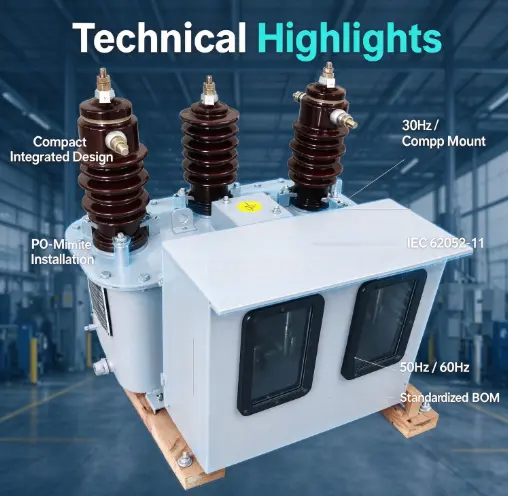
This compact pole-mounted metering unit adopts highly integrated lightweight structural design, standardised metering core and simple clamp-on mounting architecture to fit rural electrification site conditions.
- Lightweight integrated compact structure, standard pole clamp mounting: Optimised material layout cuts redundant metal volume and weight. It fits standard utility poles widely deployed in India, Bangladesh, Kenya and Tanzania. Direct band clamp installation removes the need for concrete foundation, excavation or civil works.
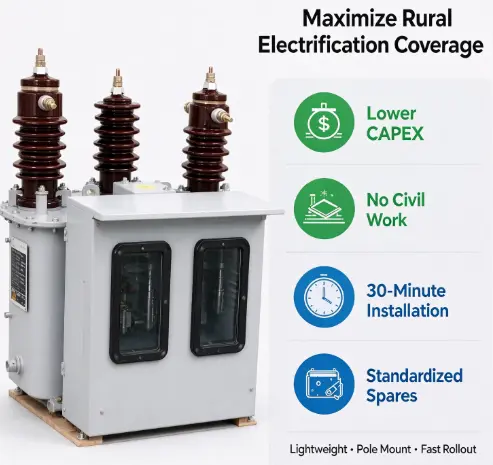
- 30-minute fast field installation: Pre-wired modular design, unified terminal marking and simple mechanical locking. Two field workers can complete mechanical fixing, wiring and pre-check within 30 minutes, no specialised heavy lifting tools required.
- Fully compliant with IEC 62052-11 metering standard: Metering core meets international accuracy and climatic test requirements, compatible with both 50Hz South Asian grids and 60Hz island networks in Philippines and Indonesia. Stable billing accuracy for agricultural and domestic rural loads.
- Simplified standardised bill-of-material, low spare part diversity: Reduce custom sub-components to the minimum. Shared spare parts library across the whole batch, lowering the burden of local warehouse stocking and technician training. Fault replacement can be completed without complex calibration.
- Basic outdoor weatherproof enclosure: Optimised for moderate tropical rural climate, anti-rain and dust protection, matching the cost positioning of rural last-mile metering.
3.Solution: Economic Dimension
The core value of this compact pole-mounted metering unit is to maximise electrification coverage under limited project CAPEX, while cutting downstream construction and after-sales pressure.
- Lower per-unit procurement cost, maximise coverage under fixed budget: Streamlined design removes over-engineered heavy structures for desert/mining use. The saved budget allows utilities to deploy many more metering tapping points and connect more rural households under the same project funding, perfectly matching the targets of RDSS and rural electrification master plans.
- Eliminate civil engineering expenditure, slash site construction cost: No foundation, concrete or land preparation fees. Labour, transport and material cost for civil works are fully removed, which is the biggest hidden saving for scattered rural sites.
- Cut installation training and after-sales support burden: Standardised design reduces training hours for local crews. Fewer unique spare parts reduce inventory capital tie-up and supply chain complexity for remote regional hubs. Mass delivery can be scheduled smoothly for tight tender milestones.
- Reduce project delay penalty risks: Fast installation and simple commissioning improve on-site progress rate. For government-funded electrification projects with strict milestone clauses, it helps EPC contractors avoid liquidated damages and keeps rollout schedules on track.
4.Solution: Whole Life Cycle Dimension
This pole-mounted metering unit is designed with full life-cycle thinking, not only focusing on initial purchase and installation, but covering long-term operation, maintenance, retrofitting and end-of-life recycling for rural grids.
- Long-term stable metering accuracy: Standardised metering core with low drift characteristic. Regular calibration cycles are extended, reducing frequent site visits and calibration expense for widely dispersed rural nodes.
- Backward & forward compatible modular design: The mounting interface, wiring terminal and form factor remain consistent across production batches. When old units need replacement in 8–12 years, new units can directly reuse the existing pole clamps and wiring without modifying poles or field circuits. No secondary civil or rework cost.
- Easy condition inspection and modular replacement: Fault diagnosis is separated into independent modules. Instead of replacing the whole cabinet, only the failed metering module can be swapped. It cuts waste and reduces inventory pressure for remote rural warehouses.
- Low environmental impact at end-of-life: Separable metal enclosure and electronic components support easy material sorting and recycling. It meets the environmental compliance requirements of multilateral bank-funded rural electrification projects, avoiding hazardous waste disposal risks.
- Unified technical documentation for the full lifecycle: Standard datasheets, operation manuals, calibration guides and retirement procedures are provided in English, supporting local DISCOM asset management systems for 10+ years asset tracking.
5.Core Deliverables & Key Benefits
- Low-cost compact pole-mounted metering unit, optimised for rural last-mile electrification
- Clamp-on pole mounting, zero civil foundation required
- 30-minute two-person field installation
- IEC 62052-11:2020 certified metering core
- Standardised components, simplified spare part management
- Adaptable for 50Hz / 60Hz rural grids and island feeders
- Complete whole-life-cycle asset management support
- Suitable for India RDSS, Bangladesh, Kenya, Tanzania, Philippines, Indonesia remote islands
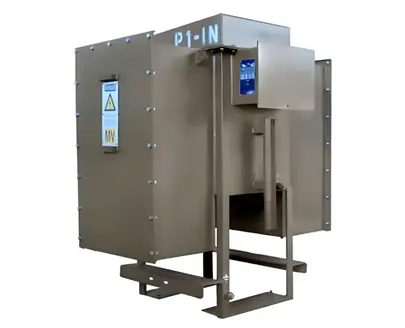
Outdoor CT&VT metering units
6.Reference Application Case
A batch of compact pole-mounted metering units was supplied for a rural feeder expansion project under India’s RDSS programme in Uttar Pradesh. The project covered over 1200 scattered village tapping points with a very limited unit budget. By switching to this compact pole-mounted metering unit, civil foundation work was completely eliminated.
Average installation time per site dropped from 3.5 hours to 28 minutes. The EPC contractor achieved the tender delivery milestone on schedule, and local DISCOM reduced spare stocking categories by 70%. From the whole life cycle perspective, the unified modular interface ensures future replacement without pole modification.
The asset team can plan the 10-year renewal budget clearly, without unexpected retrofitting cost. The programme successfully connected 22% more rural households than the original budget plan.
7.Conclusion
Rural electrification and last-mile grid expansion projects in India RDSS, Bangladesh, Kenya, Tanzania, Philippines and Indonesian remote islands are constrained by budget limits, weak local construction capability and tight delivery timelines. This low-cost compact pole-mounted metering unit solves these practical barriers with lightweight, standardised, fast-mount design.
It extends grid coverage under limited capital, cuts construction and after-sales overhead, and provides predictable whole-life-cycle asset performance. It is a tender-friendly, bankable metering solution for rural electrification EPCs and distribution utilities.