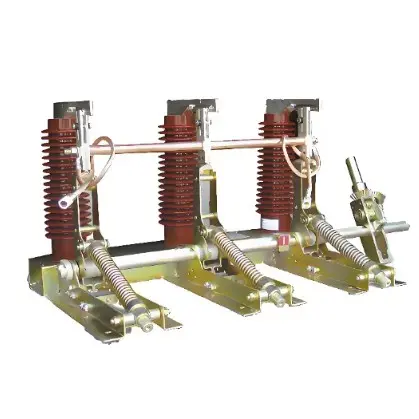
Fortifying the Safety Line of Distribution Networks: Optimization of Dynamic and Thermal Stability of Grounding Switches and Multi-scenario Practical Validation
I.Failure to Meet Dynamic and Thermal Stability Standards Leads to Equipment Damage Accidents
Dynamic and thermal stability are core performance indicators of grounding switches, directly determining their carrying capacity during short-circuit faults. However, to control costs, some enterprises lower contact material standards and simplify structural designs. This results in grounding switches being unable to withstand short-circuit current impacts, leading to frequent issues such as contact erosion, mechanical deformation, or even instantaneous popping open, which severely threatens the safety of the distribution network.
Case Study: A 10kV main step-down substation within a metallurgical enterprise utilized low-cost grounding switches. During a single-phase grounding fault where the short-circuit current reached 25kA, the switch failed in just 1.2 seconds due to the use of ordinary copper contact material and unoptimized contact pressure. This caused contact welding and separation of moving/stationary contacts, expanding the fault range and burning out three adjacent switchgear units. Repairing the power outage took 48 hours, with direct economic losses exceeding 800,000 RMB. In this case, the grounding switch failed the standard dynamic and thermal stability tests, and the lack of alignment calibration during installation further exacerbated the risk—a common hidden danger among low-priced products in the industry, which often require manual adjustment of bite depth and pressure just to barely pass tests but fail easily in actual operation.
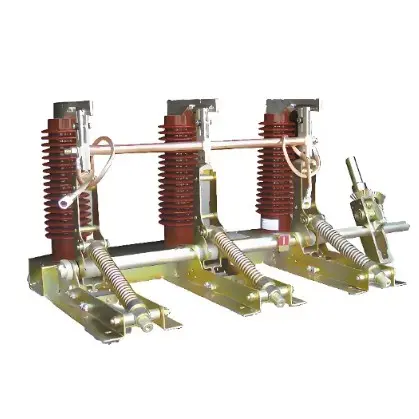
II. Core Design Upgrade: Strengthening Dynamic/Thermal Stability and Structural Reliability
Focusing on the enhancement of dynamic and thermal stability, we optimize material selection and structural design to ensure the grounding switch reliably carries loads during short-circuit faults, avoiding equipment damage risks at the source.
Material Upgrade (Reducing Loss and Corrosion Risk): Contacts and conductive components use high-purity oxygen-free copper with silver plating to reduce contact resistance and Joule heating during short-circuit currents, thereby controlling temperature rise. Interlock components are made of stainless steel with anti-corrosion and anti-salt spray coatings (salt spray testing > 1000 hours), suitable for coastal and chemical environments. Large-diameter short-circuit copper tubes are selected to ensure thermal stability requirements of 40kA/4s are met without manual adjustment.
Structural Optimization (Enhancing Mechanical and Heat Dissipation Performance): An electric lead-screw transmission mechanism ensures uniform pressure and tight contact when closed, withstanding the electromagnetic repulsion generated by40kA currents to prevent popping. The cooling structure is optimized with independent ventilation channels and aluminum alloy fins (increasing surface area by 50% over traditional designs). Combined with natural convection and smart forced ventilation, fans activate automatically when temperatures exceed thresholds, increasing cooling efficiency by over 3 times. The modular, compact design fits various switchgear specifications and simplifies maintenance.
Compliance Assurance: All products are designed and manufactured strictly according to international and domestic standards such asIEC 60298 and GB/T 11022, passing type tests including dynamic/thermal stability and internal arc fault tests to ensure every unit performs as expected in the field.
III. Solution Case Validation
To verify the effectiveness of the solution, three application cases from different industries were selected to compare performance:
Case 1: 10kV Substation Transformation for a Metallurgical Enterprise
Before: Used ordinary grounding switches with substandard stability; averaged 4–5 faults per year with O&M costs of 120,000 RMB/year. Short-circuit faults previously caused massive production losses.
After: Deployed customized grounding switches from this solution with reinforced stability, interlock protection, and intelligent monitoring. After one year of operation, zero faults occurred, O&M costs dropped to 40,000 RMB/year, and fault response time was reduced by 80%, completely resolving stability deficiencies and misoperation risks.
V. Conclusion
The safe and stable operation of grounding switches is a vital guarantee for reliable power supply in medium-voltage distribution networks. Industry pain points, such as insufficient dynamic and thermal stability, not only affect equipment lifespan but also create severe safety hazards. By addressing these issues through core design upgrades, triple-interlock protection, and scene-specific customization, this solution achieves safe, efficient, and low-cost operation throughout the equipment lifecycle—applicable to metallurgy, public grids, chemical plants, and coastal scenarios.