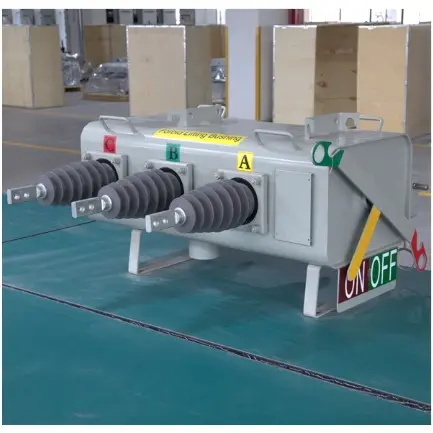
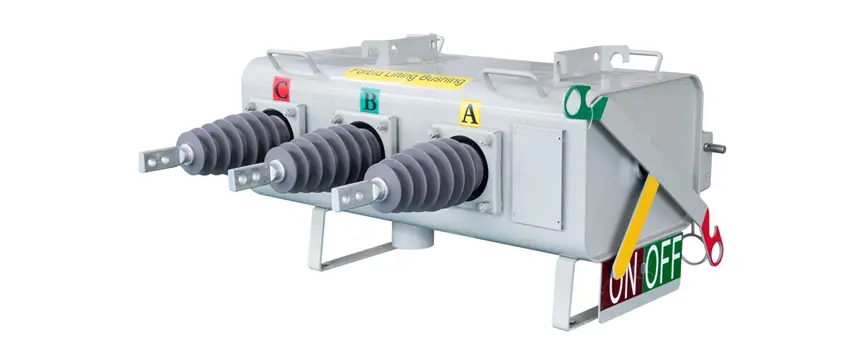
1.What Extreme Challenges Does the Tanzania 33kV LBS Seal System Face?
This report provides in-depth technical countermeasures for the high-frequency failure of SF6 Load Break Switch (LBS) seal systems in Tanzania's 33kV distribution network. Based on field data from Dar es Salaam (coastal) and Dodoma (semi-arid), the primary failure drivers are accelerated O-ring degradation and electrochemical corrosion. According to our team's operational statistics in East Africa from 2019–2025, leaks at the operating shaft and pressure relief valve (PRV) account for approximately 85% of failures. We establish a reliability baseline through -40°C rated material comparison testing and recommend upgrading to EPDM (Priority) to ensure a service life exceeding 25 years in extreme tropical environments.
[Altitude Derating Notice] In highland areas like Dodoma (altitude >1000m), reduced atmospheric pressure increases the absolute pressure differential across the enclosure, imposing higher mechanical stress on the seal system. Per the altitude correction factors in IEC 62271-1:2017 chapter 6.2.3, external insulation strength decreases by ~10% per 1000m elevation gain, with seal face pressure differential increasing by ~10–12%. For highland site selection, it is recommended to increase the seal compression design margin from the standard 15–20% to 20–25% to compensate for the additional stress in low-pressure environments.
2. How to Handle SF6 Leaks in an Emergency?
[Safety Warning] Toxic decomposition byproducts (e.g., HF, SO₂) may be present at SF6 leak sites. Per IEC62271-4:2022 chapter7.3 SF6 Handling Safety Guidelines, operators must wear gas masks and protective gloves. Direct inhalation of leaked gas in unventilated areas is strictly prohibited.When a 33kV line LBS triggers a low-pressure alarm (SF6 density drop), execute the following checklist:
Emergency Response Action List
[Temporary Sealant Usage Restrictions]
3. Why Do NBR O-Rings Accelerate Failure in Salt Spray Conditions? Environmental Factor Impact on Seal System Technical Consensus High UV & Thermal Stress Causes photo-oxidation of standard Nitrile Butadiene Rubber (NBR) O-rings. In equatorial regions, NBR elasticity loss is significantly faster than in temperate zones (field aging samples show hardness increase and tensile strength decay rates are 1.3–1.5× higher). Coastal Salt Spray (C5-M) Causes electrochemical pitting on stainless steel/aluminum seal grooves. "Crevice corrosion" in seal grooves destroys the O-ring sealing surface, causing irreversible leakage. Extreme Temp/Humidity (28-35°C / RH 80-95%) Accelerates rubber hydrolysis and metal corrosion rates. Dar es Salaam coastal sites average 87% RH. IEC 62271-1:2017 normal conditions cap 24h average RH at 95%, with water vapor pressure ≤ 2.2 kPa. Actual vapor pressure in Dar es Salaam wet seasons (~2.5–3.8 kPa) consistently exceeds this limit, classifying it as a "Special Service Condition" requiring enhanced protection. Moisture Penetration (Hydrolysis) Drives SF6 hydrolysis, producing acidic compounds like Hydrogen Fluoride (HF). HF corrodes internal insulator surfaces, reducing specific creepage distance. 4. How to Design a Seal Solution Aligned with IEC 62271 Standards?
Based on IEC 62271-1:2017 chapter 6.2~chapter 6.3 requirements for gas-filled compartments design and pressure ratings, The following upgrade solution is recommended:
4.1 What Advantages Does EPDM Offer Over NBR and HNBR?
High-quality EPDM simultaneously meets dual standards for -40℃ low-temperature elasticity and 100℃ high-temperature low compression set. This reflects a high-quality molecular crosslinking network, serving as a hard metric for guaranteeing a 25-year long-term seal.
-40℃ Testing Note: This low-temperature rating follows IEC 62271-1:2017 chapter4.3 outdoor equipment universal climate classification (Class -40℃), a standard design baseline for outdoor switchgear, not Tanzania's local minimum temperature (~10–15℃). Materials passing this extreme limit test possess excellent molecular chain flexibility and stable crosslinking performance, achieving a lower compression set rate under high temperature conditions.
SF6 Gas Compatibility Note: EPDM exhibits good tolerance to SF6 gas. Compatibility with decomposition byproducts (SO₂, HF) requires case-by-case evaluation. Per CIGRE Technical Brochure 838 (2021) — SF6 Gas Handling in High-Voltage Equipment and ASTM D471 standard test conditions (SF6 medium, 23°C, 5000h immersion), EPDM typical volume change is 3–5%, outperforming NBR (8–12%).
Case References (Multi-Party Comparison):
Seal Material Performance Comparison Table
Performance Dimension Standard NBR Hydrogenated NBR (HNBR) EPDM (Priority) Viton/FKM SF6 Gas Compatibility (ASTM D471) Good (Vol. change 8-12%) Good (Vol. change 5-8%) Good-Excellent (Vol. change 3-5%) Excellent (Vol. change < 2%) Low-Temp Brittleness Limit (-40℃) Highly prone to cracking (hardens) Good (Brittleness point ~-35℃) Maintains excellent elasticity (<-50℃) Good (Brittleness point ~-30℃) Tropical High-Temp Aging (50℃+) Prone to aging, permanent deformation Good Excellent (Stable chemical chains) Excellent UV/Ozone Resistance Poor (Cracks in 1-2 years) Moderate Excellent (Saturated backbone) Excellent Tanzania Environment Match ❌ Not Recommended ⚠️ Use with Caution in Coastal ✅ Best Recommendation ⚠️ High Cost / Backup
Why Not Viton/FKM? Viton/FKM offers optimal SF6 compatibility and high-temperature resistance, but material costs are 4–6× higher than EPDM, with an unstable East African supply chain and long lead times (typically 12–16 weeks). Considering total lifecycle costs and spare parts availability, EPDM is the optimal cost-performance choice for this application. Viton/FKM can serve as a backup for special high-demand scenarios.
4.2 How to Select a Temperature-Compensated Monitoring Solution? Solution Working Principle Accuracy & Reliability Technical Evaluation Traditional Bimetallic Compensation Mechanical physical compensation Low (±5% FS) Struggles to eliminate false alarms from significant temperature fluctuations. Microprocessor Electronic Compensation Sensor + algorithm correction High (±1% FS) Reliable data, effectively reduces inspection workload. Smart Digital Monitoring (2026 Ver.) Real-time density + trend prediction Density accuracy ±0.5% FS; Leak slope sensitivity 0.05%/month Enables predictive maintenance. Recommended integration via IEC 61850:2026protocol. 4.3 Why Adopt a Dual-Seal Design and C5-M Anti-Corrosion?
A Primary/Secondary Dual-Seal Design is adopted. The primary seal (EPDM) maintains internal pressure, while the secondary seal (dust ring) blocks external salt ions and moisture ingress. A leak detection port/vent groove is recommended between the two seals, allowing maintenance personnel to inject leak detection gas or connect a detector for early primary seal failure identification, preventing sudden pressure drops.
Dual-seal design references IEC 62271-200:2021 chapter 6.104 requirements for gas compartment seal systems, and CIGRE TB 838 best practices on "multiple seal barriers to reduce leakage risk".
4.4 What Standards Must the Anti-Corrosion Coating Meet?
Enclosures and flanges require C5-M grade epoxy powder coating. Per ISO 12944-5:2019 Table A.2, the recommended total coating thickness for C5-M environments is 280–440 μm, with a project design target of 320 μm (within recommended range). [Warning] Seal groove machining surfaces must be strictly masked from coating. Stainless steel or passivation treatment is recommended. Seal groove surface roughness must meet Ra < 0.8 μm to ensure microscopic contact integrity.
5. How to Verify the Reliability of the Upgraded Seal System?
Case Reference: Multiple manufacturers adopt identical validation paths in type test reports for similar tropical coastal conditions. Rockwill 33kV series, ABB Kenya Mombasa project, and Siemens Mozambique EDM project all deliver to a 25-year design life standard.
6. Total Cost of Ownership (TCO) Analysis Cost Dimension NBR Solution (3-5 Year Replacement Cycle) EPDM Upgrade Solution (25-Year Design Life) Seal Replacements (25 Years) 5–8 times 0–1 time Single Outage Maintenance Cost $800–1,200/unit (incl. labor, crane, downtime) Same (but frequency drastically reduced) 25-Year Cumulative Maintenance Cost $4,000–9,600/unit $800–1,200/unit SF6 Gas Replenishment Cost $200–400 per fill (incl. gas recovery) Negligible Unplanned Outage Losses Frequent (2–4 hours supply impact per event) Extremely Low
[Procurement Decision Reference] EPDM O-ring unit cost is ~30–50% higher than NBR, but maintenance savings, avoided outage losses, and eliminated gas replenishment costs over a 25-year lifecycle far exceed the initial material premium. For large-scale deployments like TANESCO, bulk upgrade ROI is typically recovered within 2–3 years.
7. Frequently Asked Questions (FAQ)
Q1: Why emphasize -40°C rated material testing in tropical regions?
A1: This low-temperature rating follows IEC 62271-1:2017chapter 4.3 outdoor equipment universal climate classification (Class -40℃), a standard design baseline, not Tanzania's local minimum (~10–15℃). EPDM passing the -40℃ brittleness test demonstrates superior molecular chain flexibility and crosslink quality, translating to lower compression set rates (per ASTM D395Method B at 100℃×70h) under high-temperature conditions. Thus, -40℃ testing is a rigorous durability screen that guarantees long-term seal performance in tropical environments.
Q2: Why does the 33kV LBS seal fail faster in Dodoma compared to Dar es Salaam?
A2: In high-altitude regions like Dodoma (>1000m), the lower atmospheric pressure increases the absolute pressure differential across the seals. According to IEC 62271-1, this increases mechanical stress by 10-12%, accelerating micro-leakage if the seal compression isn't increased to 20-25%.
Q3: Is Fluorosilicone sealant a permanent fix for SF6 leaks in Tanzania?
A3: No. Fluorosilicone is an emergency measure only. While it resists SF6 decomposition products (HF, SO2), it must be replaced with high-grade EPDM seals within 72 hours to ensure long-term integrity and compliance with IEC 62271-4:2022.
Q4: Can existing NBR-sealed LBS be directly upgraded to EPDM?
A4: Yes. Provided seal groove dimensions comply with ISO 3601-1:2012 standard tolerances (O-ring and gland dimensions), housing replacement is typically unnecessary. Simply procure EPDM O-rings with matching cross-section and dedicated silicone-based lubricant to finish the retrofit during planned power outage. The retrofit cost accounts for approximately 15–20% of the price of new equipment.
Q5: Why is EPDM preferred over NBR for SF6 LBS in Tanzania's coastal regions?
A5: Intense equatorial UV and high temperatures cause rapid photo-oxidation and elasticity loss in standard NBR O-rings. EPDM offers superior heat and salt spray corrosion resistance, extending maintenance intervals from 3 years to over 25 years in C5-M high-corrosion environments.
Q6: Can Viton (FKM) seals be used for 33kV LBS repair in East Africa?
A6: While FKM offers stronger chemical resistance, EPDM remains the recommended priority for Tanzania. It delivers excellent low-temperature flexibility (certified to -40℃), and for local utilities like TANESCO, it provides significantly better supply chain stability and cost-effectiveness.
Technical Team: Rockwill Technical Team
Reference Standards & Further Reading