Ⅰ. Background and Industry Pain Points 1. Market Potential and Current State
Industrial and Commercial Energy Storage Potential: Exceeds 500 GWh, yet the penetration rate is below 3%.
Policy Drivers: Policies like Time-of-Use (TOU) tariff reforms and Virtual Power Plants (VPPs) are improving economic viability. However, the industry is stuck in a low-price competition trap, where excessive initial cost compression leads to significant increases in lifespan and safety risks.
2. Core Challenges Across the Lifecycle
Lifespan Below Expectations: Standard battery cells require replacement after only 8 years, with retrofit costs reaching 0.5 RMB/Wh.
Revenue Volatility Risk: Adjustments to electricity pricing policies and inflexible charging/discharging strategies reduce arbitrage margins.
Safety and Operations Silos: Risk of thermal runaway (e.g., fire), delayed fault response, and lack of guaranteed residual value.
II. Full Lifecycle Solution Framework
Phase 1: Planning & Design
Intelligent Capacity Planning: Utilizes load forecasting, PV output simulation, and environmental condition modeling (e.g., Gotion's "Tianji System") to dynamically derive the optimal storage capacity solution, mitigating investment risk from sizing deviations.
Example: A Zhejiang project achieved a 21% IRR using a two-charge-two-discharge strategy (off-peak price: 0.43 RMB/kWh → peak price: 1.41 RMB/kWh).
Multi-Scenario Design: Tailored solutions for industrial parks, data centers, PV-storage-charging stations, etc.:
Industrial Parks: Peak demand management + emergency backup.
Commercial Buildings: VPP integration + dynamic capacity expansion.
Phase 2: Financing & Investment
Model
Suitable Clients
Advantages & Cases
Energy Management Contract (EMC)
Owners with low budget constraints
Investor bears risk; revenue sharing (Owner 15% + Investor 85%).
Finance Lease + Insurance Closed Loop
SMEs & Small Commercial Users
Gotion partners with financial institutions to offer 4% low-interest loans, coupled with capacity degradation insurance (15-year SOH guarantee).
Owner Investment
Large High-Power Enterprises
Combined with residual value recycling (7% of project cost), improving cash flow by 5%.
Phase 3: Product & Deployment
Long-Life Battery Cell Technology: Utilizes cells like the Kunlun cell with 15,000 cycles (SOH ≥70%). Liquid cooling extends lifespan by 1.6 years compared to air cooling, achieving 15 years without replacement.
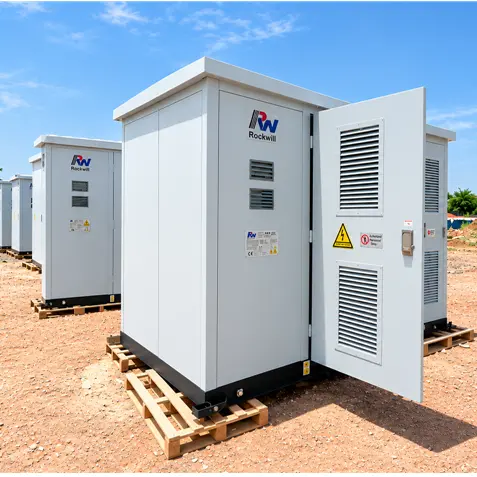
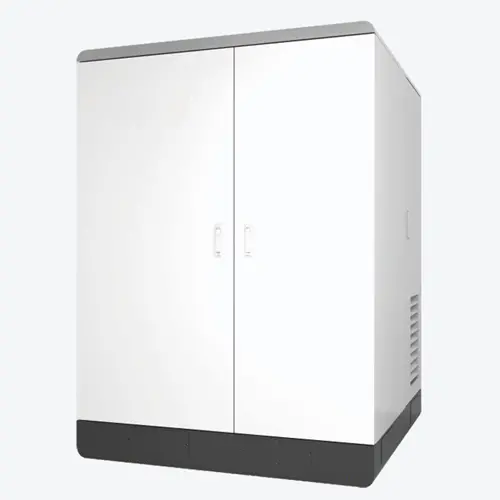
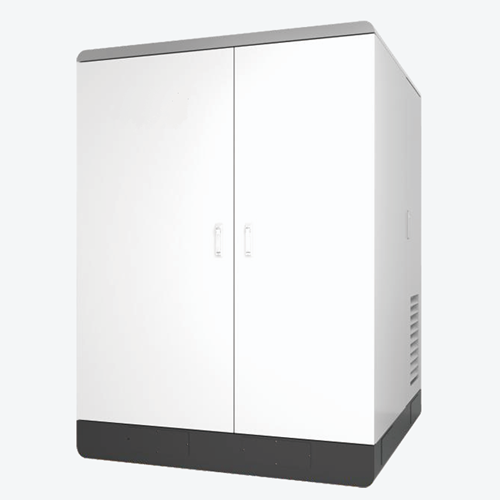
Modular Integrated Design: Systems like Linkages-Power's string liquid cooling cabinets enable single-string replacement and mixing of new/old batteries, reducing maintenance costs by 30%.
Phase 4: Intelligent Operations
Dynamic Strategy Optimization
Tianshu EMS System: Uses AI load forecasting (93% accuracy) to dynamically switch between strategies: peak-valley arbitrage, demand management, and VPP response.
Case: Shenzhen Tianjian project achieved 100% VPP response compliance rate, increasing revenue by 26.5%.
Multi-Revenue Channel Coordination
Revenue Type
Contribution
Key Strategy
Peak-Valley Arbitrage
60-70%
Two-charge-two-discharge (Peak/Off-peak price differential > 0.7 RMB/kWh)
Demand Response
15-20%
Response price up to 5 RMB/kWh (Shenzhen)
Grid Ancillary Services
10-15%
Frequency regulation compensation: 0.75 RMB/kWh
Phase 5: Operations & Maintenance (O&M) Assurance
Predictive Maintenance: Uses BMS + Digital Twin platforms to warn of thermal runaway risks (e.g., three-level fire protection + five-level fusing mechanisms), with fault response time < 12 hours.
Cost Control: Standardized O&M (1-2% of equipment cost) + remote monitoring covering 570+ service outlets, enabling overnight problem resolution.
Phase 6: Recycling & Reuse
Residual Value Closed Loop: Provides battery recycling services, achieving a 7% residual value rate used to offset new equipment costs.
Second-Life Applications: Retired batteries converted to backup power or solar storage applications, extending asset value streams.
III. Key Technology Enablers
Hardware Core: Deeply integrated cell-PCS design, reducing system losses (round-trip efficiency: 88%).
Software Core:
LCOE optimized below 0.5 RMB/kWh.
Dynamic electricity pricing game theory algorithms, adaptable to TOU tariff policies in 97% of provinces.
Ecosystem Synergy: Tri-dimensional integration of Finance (leasing), Insurance (capacity degradation), and Recycling (residual value guarantee).
IV. Implementation Path Recommendations
Self-Build Model: Suitable for high-power enterprises (e.g., steel, data centers); prioritize demand management + VPP.
EMC Model: Developer-led, with owner providing space; suitable for small-medium manufacturers.
Regional Cluster Deployment: Industrial park-wide planning of integrated PV-storage-charging + load control, reducing single-project marginal cost.
V. Benefits and Economics
Key Indicator
Traditional Solution
Full Lifecycle Solution
Static Payback Period
6-8 years
4.09 years
Full Lifecycle IRR
8-10%
21.06%
Levelized Cost (LCOE)
0.68 RMB/kWh
0.50 RMB/kWh
Annual Safety Failure Rate
0.5%
< 0.1%